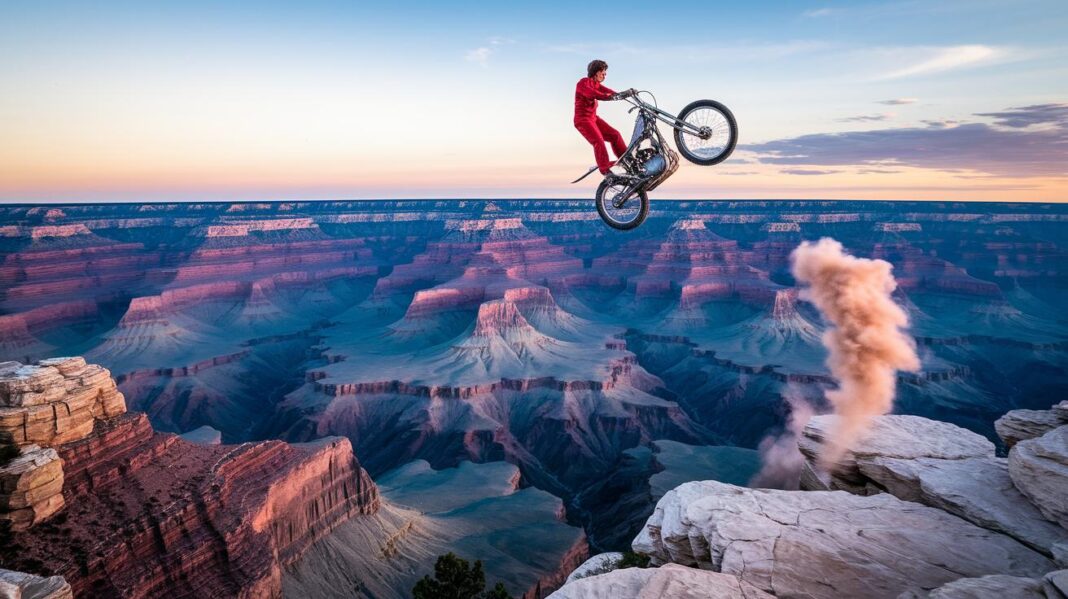
Have you ever wondered if Evel Knievel might have soared over the Grand Canyon? The idea is pretty wild, don’t you think? Legends often paint this as a breathtaking leap, but the true story has its own twist.
Because of strict park rules, that dramatic jump was never on the agenda. Instead, he aimed for an unforgettable feat at Snake River Canyon, a place that adds a touch of mystery and raw beauty to his daring legacy.
Over the years, storytellers have mixed a bit of flash with the facts, turning his adventure into a larger-than-life myth. Today, we’re peeling back those layers to uncover the real tale behind one of daredevil history’s most famous legends.
Debunking the Grand Canyon Jump Myth
The story of Evel Knievel taking a leap over the Grand Canyon might sound thrilling, but the reality is much simpler. Despite the rumors and flashy headlines, Knievel never actually made that jump. Back in the late 1960s, he did look into the possibility, but strict park rules made it a no-go. Grand Canyon National Park clearly forbids any motorized stunts, and permits were never granted on grounds of safety, the environment, or legal issues.
Instead, Knievel decided to focus on venues where he could perform safely and legally. His unforgettable stunt at Snake River Canyon in Idaho captured the nation's imagination and became his signature feat. When you hear tales about the Grand Canyon jump, just picture a daring idea that never left the drawing board, one of those stories that grows with every retelling.
The mix-up comes from the excitement surrounding his other high-energy shows. People often blend the facts from those events with the myth of a Grand Canyon leap. In truth, strict park rules and logistical challenges kept the majestic canyon off his official itinerary. This serves as a reminder that not every sensational headline tells the full, accurate story.
The Real Evel Knievel Canyon Leap: Snake River Stunt
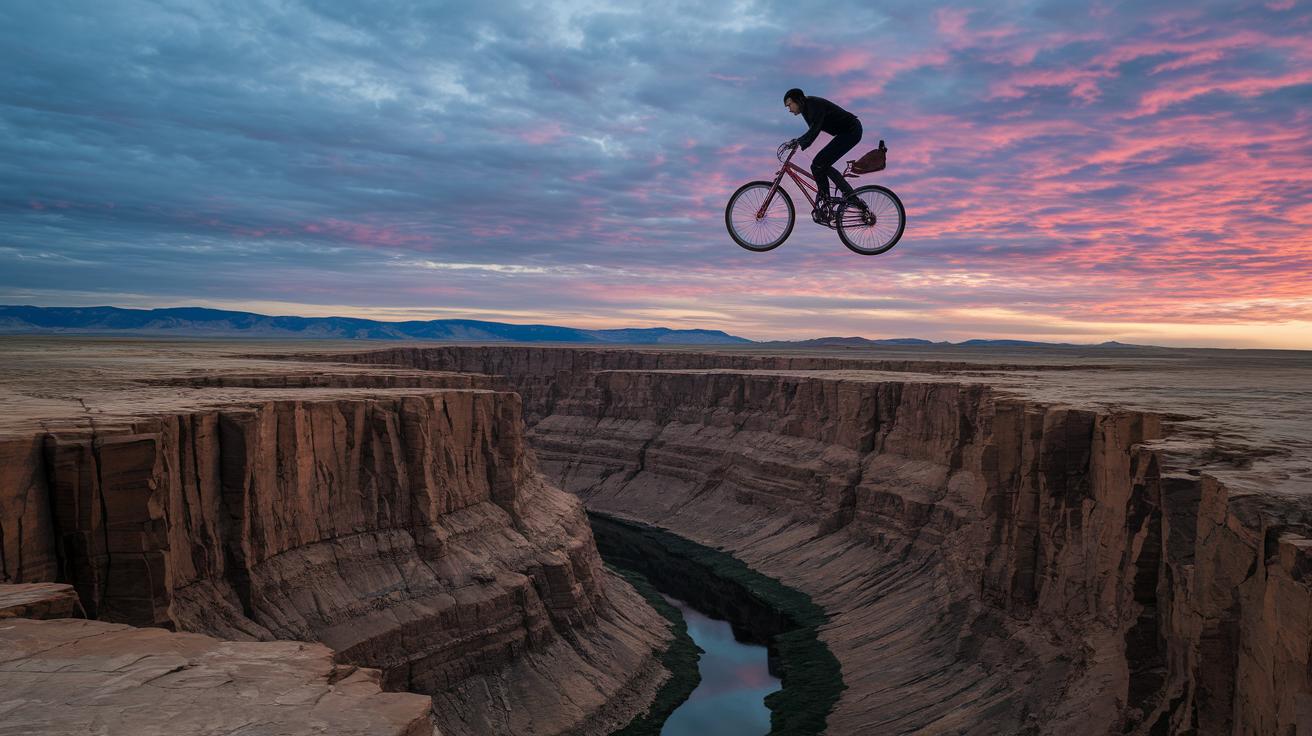
On September 8, 1974, Evel Knievel set out on an unforgettable adventure at Snake River Canyon near Twin Falls, Idaho. He hopped onto his custom Skycycle X-2, a rocket-powered motorcycle that looked straight out of a wild dream, and aimed to make a jump that would thrill millions. It was a day when ambition boldly met the laws of physics, sparking talks about what really counts as a historic motorcycle leap.
So, what actually went down? The Skycycle X-2 was built to leap impressively over the canyon, but things had other plans. As soon as it took off, the safety parachute popped open too early. The sudden parachute opening, paired with unexpected wind gusts, sent the vehicle into a wild spin and a hard crash landing. It turned a high-flying stunt into a dramatic misadventure that left everyone on the edge of their seats.
Even though Knievel didn’t make it across the canyon, his attempt is still remembered as a true piece of daredevil history. The live broadcast captured every moment of that adrenaline rush, showing off both the high-tech challenges and the raw excitement of risky stunts. His effort continues to inspire fans and dreamers alike, reminding us that sometimes, pushing our limits is its own kind of victory.
Engineering the Skycycle X-2 for Evel Knievel’s Canyon Jump Attempt
Imagine a ride that breaks all the rules. The Skycycle X-2 wasn’t your typical motorcycle, it ran on a quirky steam engine that set it apart from standard bikes. Engineers worked out the perfect amount of power to help it soar over a gap as wide as 1,600 feet. Every part was carefully designed to keep the bike steady and safe during its high-flying stunt.
Now, picture this: the parachute meant to slow the bike down started opening way too soon. This surprise twist forced the system to cope with sudden gusts and unpredictable movements. Details like the choice of light alloys and extra-strong frames were crucial, playing a big role in how well the bike handled all the wild forces mid-air.
In the end, these challenges revealed the real art behind extreme stunt design. Each piece of the Skycycle contributed to a bold experiment that didn’t go exactly as planned but taught engineers valuable lessons about pushing the limits in performance and innovation.
Legacy of Evel Knievel’s Canyon Feats: Monuments and Modern Re-creations
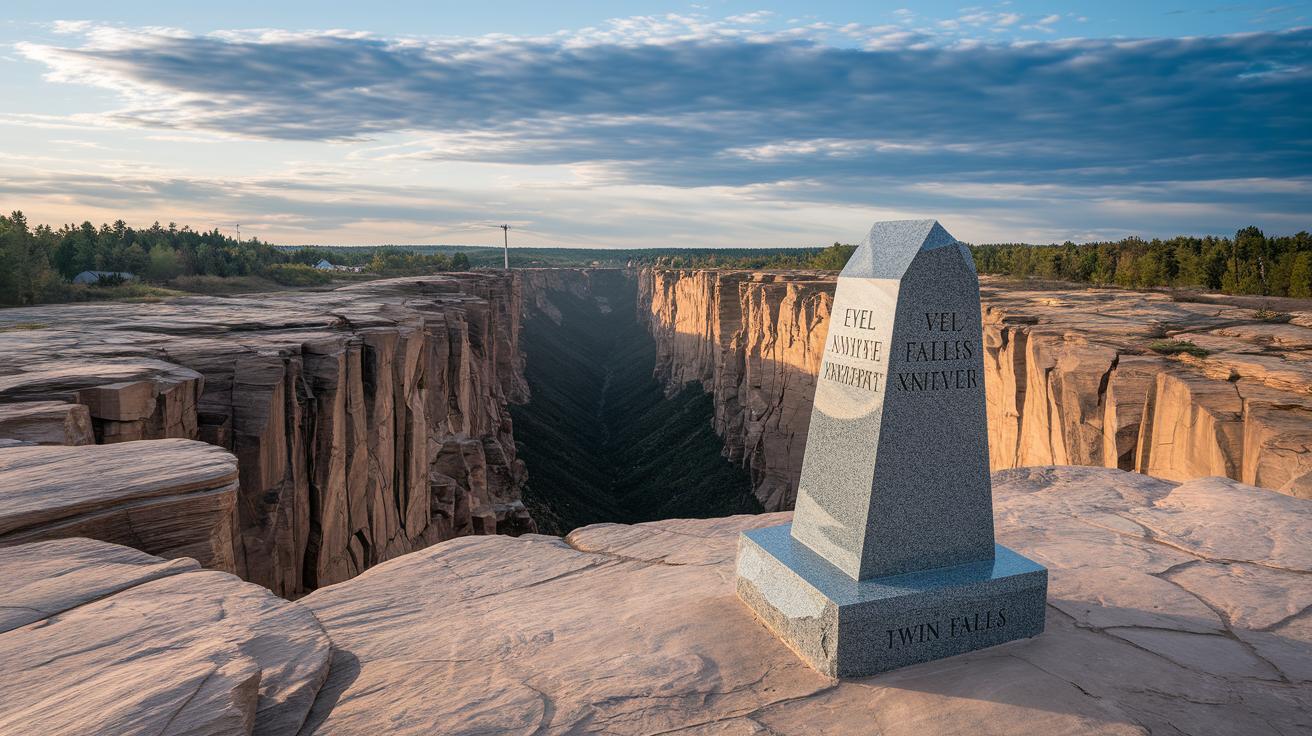
Evel Knievel’s daring stunts have left a legacy that has grown with time and technology. At Twin Falls, a granite monument marks the 1974 Snake River Canyon stunt site, a day when engineering, courage, and risk came together in a breathtaking display. It stands as a reminder of when every jump was a bold step toward setting an unforgettable aerial record.
The thrill of that historic performance still captivates today. On September 16, 2016, stuntman Eddie Braun wowed audiences with his creation, the Evel Spirit, covering an impressive 2,000 feet. His feat highlighted improvements in materials, propulsion, and safety, much like a well-planned journey that benefits from every modern advance. Old footage of the Skycycle X-2 event still inspires engineers and historians alike, offering a clear look at what it took to prepare for such high-stakes challenges.
Knievel’s fearless spirit continues to light the way for today’s performers. His record of wild, airborne feats paved the road for modern daredevils who push past old limits with refined techniques. The deep connection between past and present keeps his legendary showmanship alive, fueling modern ambition and creative innovation. Every element of his storied past reminds us that with courage and innovation, the sky is never the limit.
Media Portrayal and the Grand Canyon Jump Myth
Media stories turned what was once a simple record into something larger than life. Instead of just stating that Knievel never jumped the canyon, bold headlines and dramatic phrasing added a touch of magic. One such headline read, "Evel defies gravity in a leap no man could dare." It makes you wonder how a few extra words can change our view completely.
People remember Knievel’s later stunts, like Robbie Knievel’s near-miss in 1999, which only deepened this legendary image. These exciting headlines distracted us from the cold facts, blending myth with history.
Now, historians dig deep into how these stories shape our memory. They show that a well-told tale can sometimes overshadow actual records. In fact, some suggest starting with a surprising truth, like how Knievel was once a regional star, and his talent was only amplified by such fantastic headlines.
Final Words
In the action of separating myth from fact, this article unraveled why the evel knievel grand canyon jump never came to be. We traced how regulations and safety concerns steered Knievel away from a canyon leap while highlighting the real stunt at Snake River Canyon. A detailed look at the Skycycle X-2’s design and media hype helped clear up the misunderstandings. The facts remind us that even iconic feats are shaped by real-world obstacles and bold innovation, leaving us with an inspiring glimpse into daredevil history.
FAQ
Did Evel Knievel actually jump the Grand Canyon?
The claim that Evel Knievel jumped the Grand Canyon is a myth. In fact, due to strict regulations and safety concerns, he never attempted a motorized leap over the Canyon, choosing other venues instead.
What was Evel Knievel’s biggest jump?
Evel Knievel’s most notable stunt was his Snake River Canyon attempt using the Skycycle X-2. Despite its dramatic build-up, the stunt ended with a crash landing caused by a premature parachute deployment.
What happened to Robbie Knievel when he attempted a Grand Canyon jump?
The story of Robbie Knievel involves a jump near the Grand Canyon’s West Rim, which helped fuel the myth. His attempt, however, did not match the scale or impact of Evel’s well-known stunts.
How did the Snake River Canyon stunt unfold?
The Snake River Canyon stunt saw Knievel riding the custom Skycycle X-2. A premature parachute deployment and strong winds caused a spiral descent, turning the event into a dramatic, live spectacle for many viewers.
What role did the Skycycle X-2 play in Evel Knievel’s stunts?
The Skycycle X-2 was a specially engineered, steam-powered vehicle designed for high leaps. Its lightweight design and integrated parachute system were key factors in the stunt, though the system activated too early during the jump.
How did media shape the Grand Canyon jump myth?
Media coverage, with its provocative headlines and repeated rumors, blurred the line between proposed stunts and reality. This coverage helped create and perpetuate the belief that a Grand Canyon jump was part of Evel Knievel’s legacy.
Who is Robbie Knievel in relation to Evel Knievel?
Robbie Knievel is a prominent stunt performer linked to Evel Knievel’s daredevil legacy. His own high-profile attempts, including the Grand Canyon area jump, contributed to the ongoing fascination with extreme motorcycle stunts.
Has anyone ever successfully jumped the Grand Canyon?
No performer has officially completed a successful motorized jump over the Grand Canyon. Despite popular myths and media embellishments, confirmed records show that no one has achieved this extreme stunt.